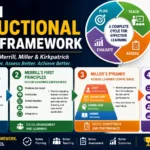



Modern Instructional Design Framework – Integrating Bloom, Merrill, Miller & Kirkpatrick
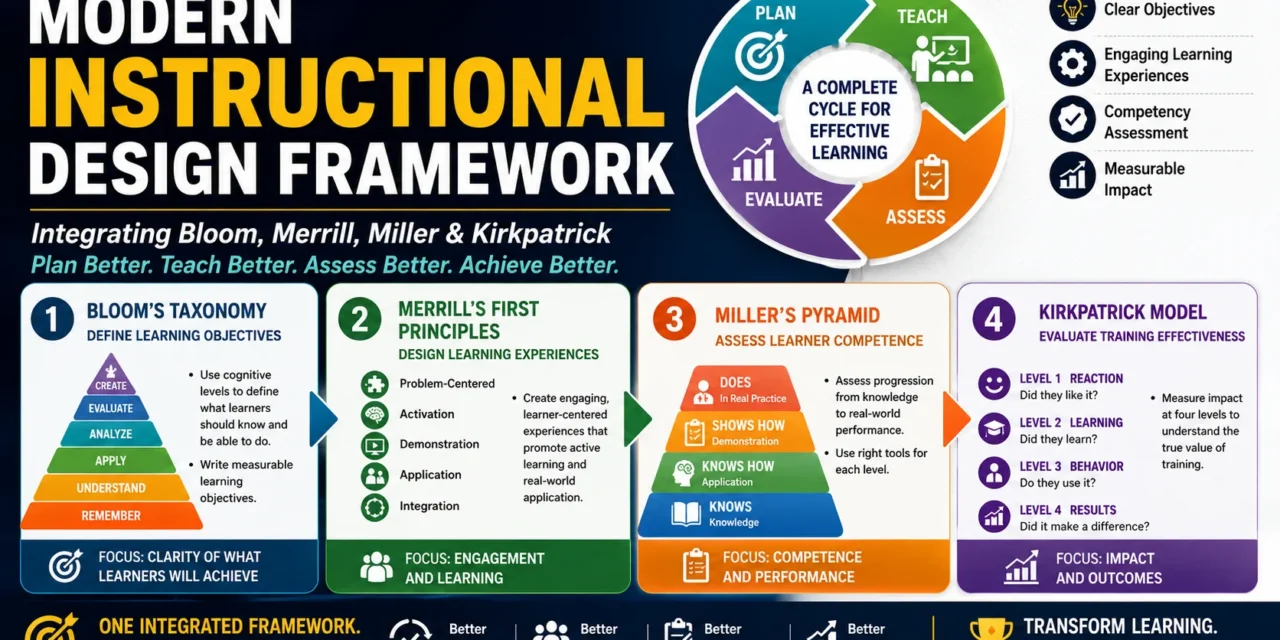
Designing an effective course involves much more than preparing slides or delivering lectures. The ultimate goal is to create learning experiences that develop knowledge, build competence, improve performance, and deliver measurable outcomes.
Many educators use individual instructional models, but each addresses only one part of the learning process. The real power lies in integrating complementary frameworks into a single instructional design workflow.
A practical and evidence-based sequence is:
Bloom’s Taxonomy → Merrill’s First Principles → Miller’s Pyramid → Kirkpatrick Model
Together, these four frameworks guide educators through the entire educational journey—from defining learning objectives to evaluating the impact of training.
Why Integrate These Models?
Each framework answers a different educational question.
| Framework | Answers the Question |
|---|---|
| Bloom’s Taxonomy | What should learners know and be able to do? |
| Merrill’s First Principles | How should learning be designed? |
| Miller’s Pyramid | Can learners perform competently? |
| Kirkpatrick Model | Did the training achieve meaningful results? |
Instead of working independently, these models complement one another to create a complete learning ecosystem.
The Complete Instructional Design Workflow
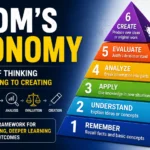
Step 1: Bloom’s Taxonomy — Define Learning Objectives
Everything begins with clear learning outcomes.
Bloom’s Taxonomy helps educators identify the level of thinking learners should achieve, progressing from basic knowledge to higher-order cognitive skills.
Purpose
- Define measurable learning objectives.
- Select appropriate cognitive levels.
- Align teaching with expected outcomes.
Example
Topic: Hypertension
By the end of the session, learners will be able to:
- Remember the diagnostic criteria.
- Explain the causes of hypertension.
- Apply treatment guidelines.
- Analyze patient cases.
- Evaluate treatment options.
- Create a patient education plan.
At this stage, the focus is on planning what learners should achieve.
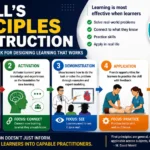
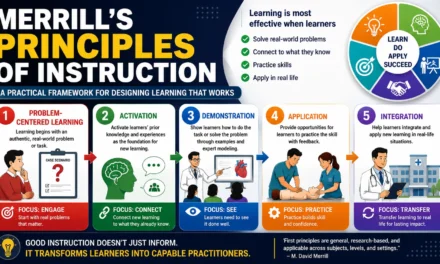
Step 2: Merrill’s First Principles — Design Learning Experiences
Once the objectives are defined, the next step is designing how learning will happen.
Merrill’s model transforms learning objectives into engaging educational experiences.
The Five Principles
- Problem-Centered – Begin with a real-world challenge.
- Activation – Connect with prior knowledge.
- Demonstration – Show how the task is performed.
- Application – Provide guided practice.
- Integration – Encourage learners to apply learning in authentic settings.
Example
Instead of beginning with a lecture on hypertension:
- Present a patient with elevated blood pressure.
- Discuss learners’ previous experiences.
- Demonstrate proper blood pressure measurement.
- Allow learners to practice.
- Integrate learning into clinical postings.
At this stage, the focus shifts from what learners should know to how they learn most effectively.
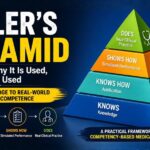
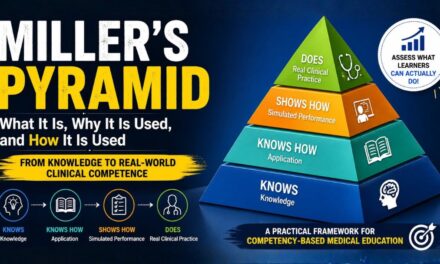
Step 3: Miller’s Pyramid — Assess Learner Competence
Learning is incomplete without assessment.
Miller’s Pyramid helps educators evaluate whether learners can move beyond knowledge and demonstrate competence in practice.
Four Levels
- Knows – Knowledge
- Knows How – Application
- Shows How – Demonstration
- Does – Real-world performance
Example
| Miller Level | Assessment |
|---|---|
| Knows | MCQ |
| Knows How | Case-based discussion |
| Shows How | OSCE |
| Does | Mini-CEX, DOPS, Workplace-Based Assessment |
This ensures assessment measures actual competence, not just theoretical understanding.
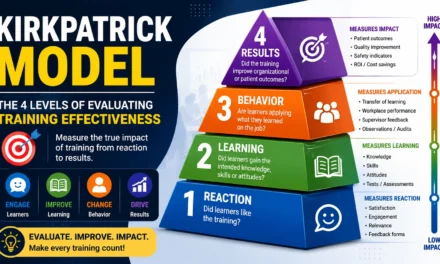
Step 4: Kirkpatrick Model — Evaluate Training Effectiveness
Assessment tells us whether learners are competent, but it does not reveal whether the training program itself was successful.
This is where the Kirkpatrick Model completes the cycle.
Four Levels
- Reaction – Did learners value the training?
- Learning – Did they acquire knowledge and skills?
- Behavior – Are they applying learning in practice?
- Results – Has the training improved organizational or patient outcomes?
Example
After hypertension training:
- Learners report positive engagement.
- Knowledge scores improve.
- Blood pressure measurement techniques improve during clinical postings.
- Hospital quality indicators demonstrate better hypertension management.
Now the focus moves beyond learners to the impact of the educational program.
Putting It All Together
Imagine you’re designing a course on Basic Life Support (BLS).
| Stage | Framework | What You Do |
|---|---|---|
| Planning | Bloom’s Taxonomy | Define objectives from remembering CPR steps to evaluating emergency scenarios. |
| Teaching | Merrill’s First Principles | Use case scenarios, demonstrations, simulations, and hands-on practice. |
| Assessment | Miller’s Pyramid | Assess knowledge, simulation performance, and workplace competence. |
| Evaluation | Kirkpatrick Model | Measure learner satisfaction, skill acquisition, workplace behavior, and patient outcomes. |
Each framework builds on the previous one, creating a seamless educational process.
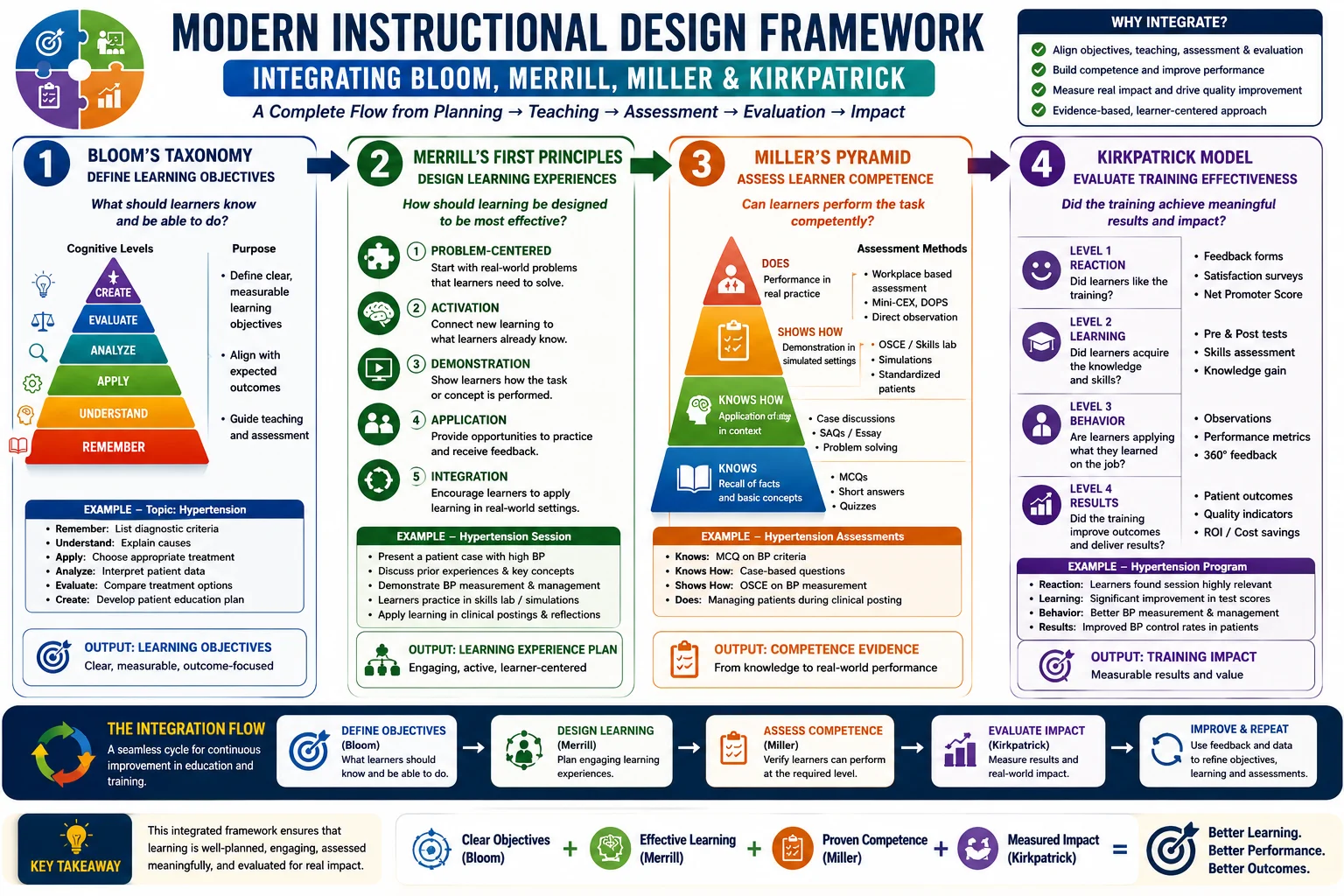
Visual Workflow
Learning Objectives
        │
        ▼
 Bloom's Taxonomy
        │
        ▼
 Instructional Design
        │
        ▼
 Merrill's First Principles
        │
        ▼
 Competency Assessment
        │
        ▼
 Miller's Pyramid
        │
        ▼
 Program Evaluation
        │
        ▼
 Kirkpatrick Model
        │
        ▼
 Continuous Quality Improvement (CQI)
Benefits of This Integrated Approach
- Aligns objectives, teaching, assessment, and evaluation.
- Creates learner-centered and competency-based education.
- Improves engagement through active learning.
- Ensures assessments measure real-world competence.
- Demonstrates the educational impact using measurable outcomes.
- Supports continuous quality improvement (CQI).
This workflow is equally valuable in medical education, nursing, dentistry, pharmacy, allied health, engineering, higher education, and corporate learning.
A Simple Way to Remember
Think of the four frameworks as answering four essential questions:
| Framework | Key Question |
|---|---|
| Bloom’s Taxonomy | What should learners learn? |
| Merrill’s First Principles | How should they learn? |
| Miller’s Pyramid | Can they perform? |
| Kirkpatrick Model | Did the training make a difference? |
Key Takeaways
An effective educational program is not built around lectures alone—it is built around a systematic process that connects learning objectives, instructional design, competency assessment, and program evaluation.
The integrated workflow is:
- Bloom’s Taxonomy → Define clear, measurable learning objectives.
- Merrill’s First Principles → Design engaging, learner-centered instruction.
- Miller’s Pyramid → Assess competence from knowledge to workplace performance.
- Kirkpatrick Model → Evaluate the effectiveness and impact of the training.
Together, these frameworks create a complete instructional design cycle that ensures learners not only acquire knowledge but also apply it competently, while enabling educators to continuously improve the quality and effectiveness of their educational programs.
Final Thought
No single instructional framework can address every aspect of teaching and learning. Bloom’s Taxonomy defines what learners should achieve, Merrill’s First Principles shape how they learn, Miller’s Pyramid confirms whether they can perform, and the Kirkpatrick Model evaluates whether the training created meaningful impact. When integrated into a single workflow, these frameworks provide a practical blueprint for designing high-quality, competency-based education that is engaging, measurable, and focused on real-world performance.
This post may contain affiliate links, which means I may earn a commission for purchases made through these links. Your support will encourage us to continue adding value to you through blogs like this. Learn more on my Private Policy page.